Availability: 100 In Stock
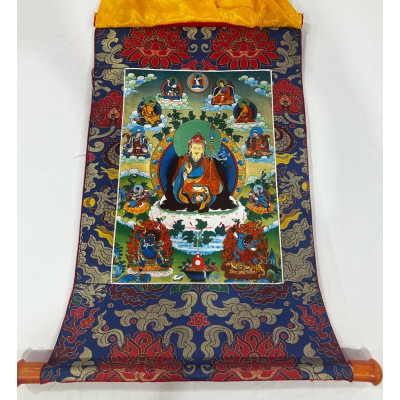
Guru Tsangye Thangka (75cmx46cm flex printed with brocade)

There are 48 products.
Active filters
Guru Tsangye Thangka (75cmx46cm flex printed with brocade)
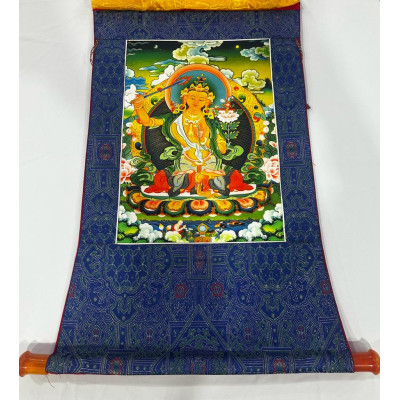
Jamphel Yang is also known as Manjushri.
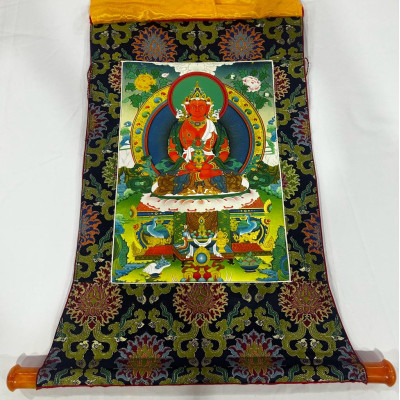
Tsepak Mey Thangka (75cmx46cm flex printed with brocade)
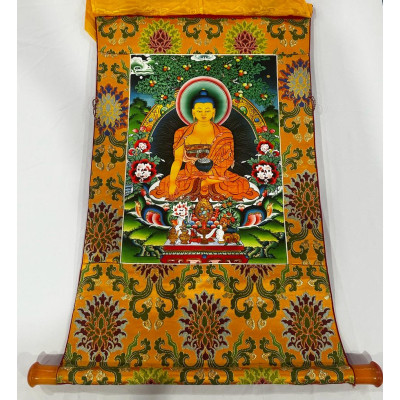
Tonpa Shenrab lived 18,000 years ago, predating Gautama Buddha. Practitioners of Bon believe that he first studied the Bon doctrine in Tagzig Olmo Lung Ring, at the end of which he pledged to Shenlha Okar, the god of compassion, that he would guide the people of this world to liberation.
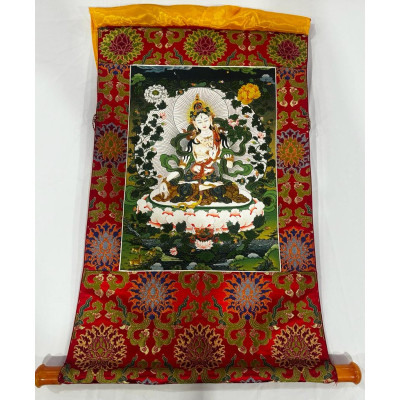
White Tara is a revered figure in Buddhist mythology, often depict as a compassionate and serene goddess. She embodies peace and emanates loving compassion, bringing grace and dignity to various situtations.
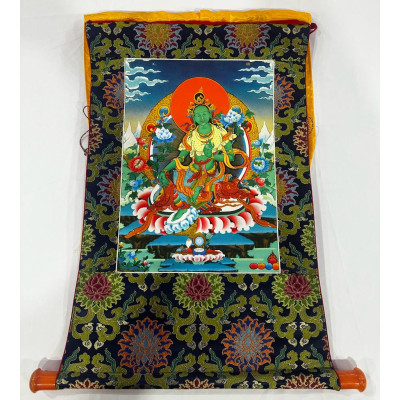
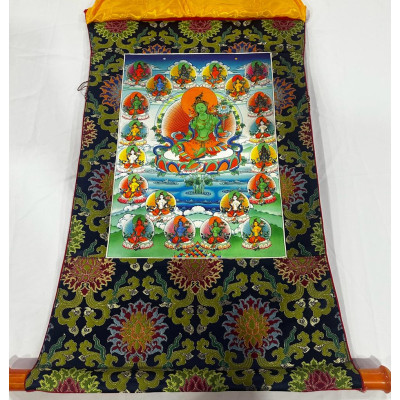
Green Tara is the main form of Tara, who made a vow to always returns as a female Bodhisattva, showing us hat anyone can attain Enlightenment. She exudes an aura of emerald green, radiant with the attainment of the Six Perfections of giving, ethics, patience, effort, meditative stabilisation and wisdom, and bright with her ever-compassionate care for all sentient beings.
Rigsum Gonpo means the "Protectors of the three realms" and refers to Avalokiteshvara, Manjushri and Vajrepani. Four temples are dedicated to these deities in the cardinal directions of the old city of Lhasa, known as the north, south and west...
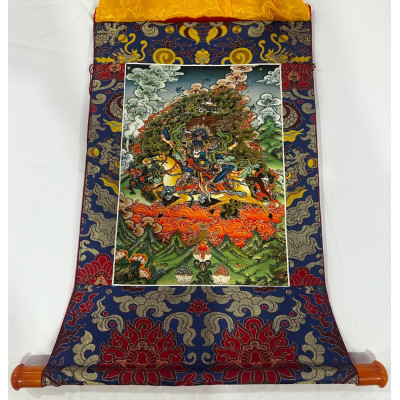
Palden Lhamo is main Dharma protectors in Tibetan Buddhism. Her eyes represent past, present and future. She is dark blue in colour representing her attainment of great bliss- the realization of emptiness. Her right hand is in the sky holding a skull cup representing the destruction of obstacles. She carries a human bag full of diseases that she collects from those who invoke her. Her legs are in a semi-relaxed posture and chains connect one ankle to the other. She is the personal protector of the Panchen Lama and of all fourteen incarnations of the Dalai Lama.
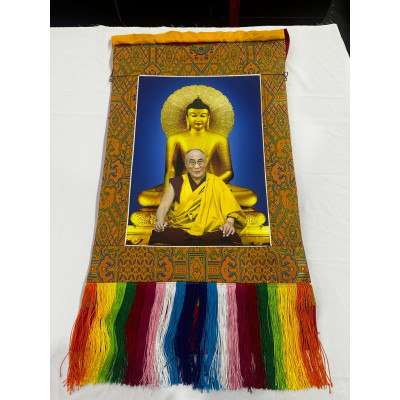
Tibetan Thangka is a traditional form of Buddhist painting. It usually depicts deities, mandalas, or spiritual scenes. Thangkas are highly detail and vibrant, and they serve as visual aids for meditation and spiritual practice. They are considered scared and are often used in religious ceremonies and as object of devotion.
Tibetan Thangka is a traditional form of Buddhist painting. It usually depicts deities, mandalas, or spiritual scenes. Thangkas are highly detail and vibrant, and they serve as visual aids for meditation and spiritual practice. They are considered scared and are often used in religious ceremonies and as objects of devotion.
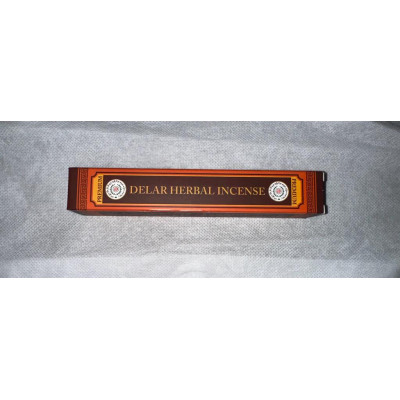
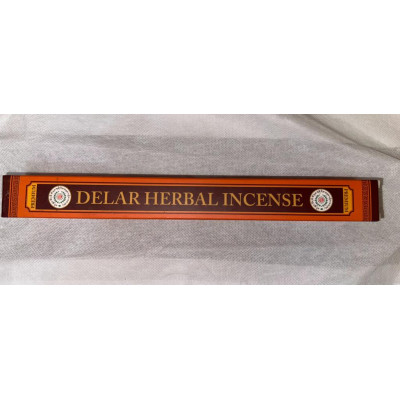
Delar Herbal Incense is exclusively prepared from more than 27 pure and rare herbs, blended proportionately based on the age old traditional incense making.
Delar Herbal Incense is exclusively prepared from more than 27 pure and rare herbs, blended proportionately based on the age old traditional incense making.